The name of the Capo Carbonara Marine Protected Area and the homonymous promontory derive from the ancient name of Villasimius, “Crabonaxa”, linked to the use of wood for the production of coal.
The area is located in the south-eastern part of Sardinia and was established in 1998. It covers an area of approximately 14,360 hectares and is the third largest marine area in Sardinia.
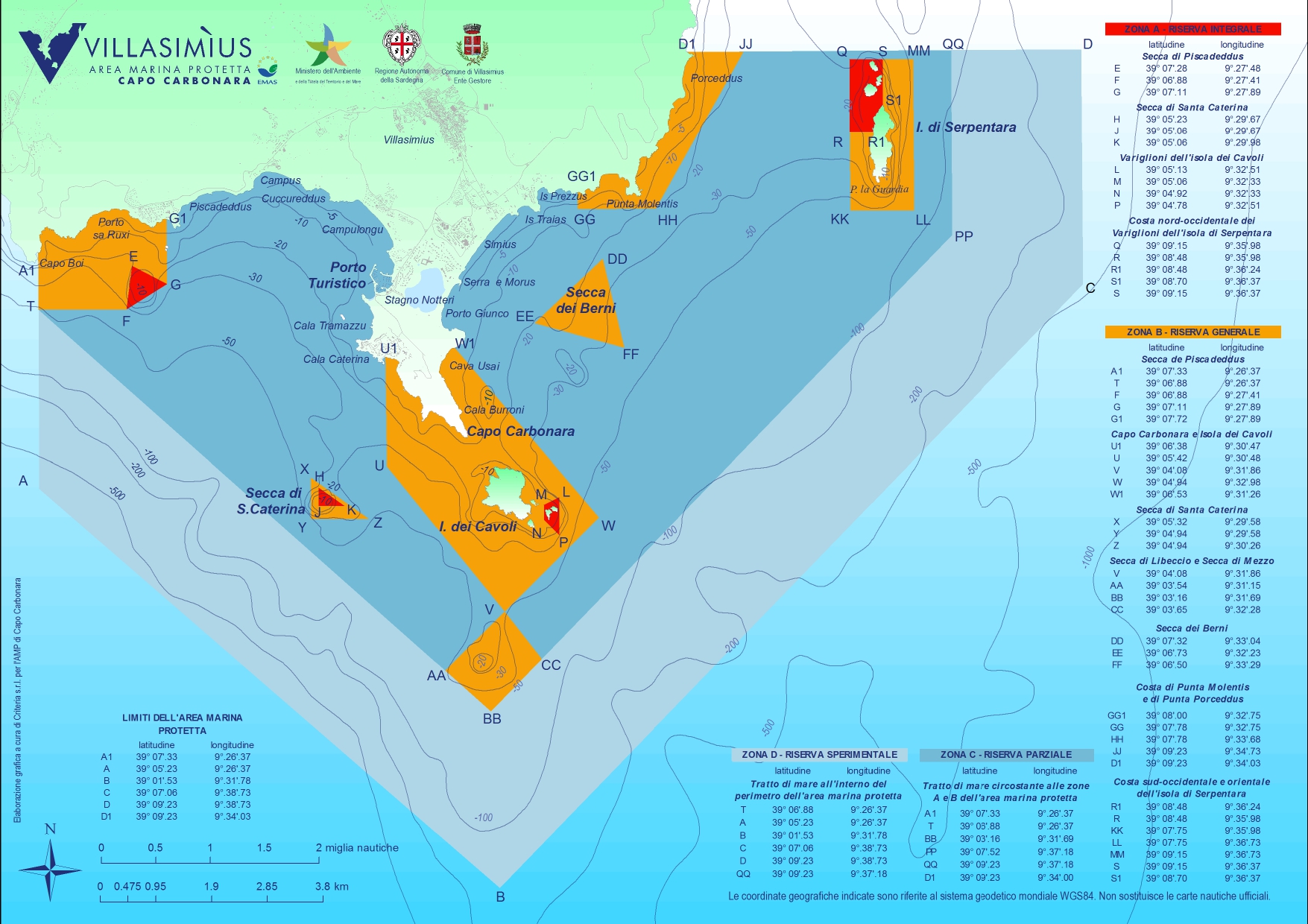
The territory of the Capo Carbonara Marine Protected Area extends from Cala Pisano to Punta Is Proceddus and includes the entire area of sea surrounding the island of Serpentara and the island of Cavoli, as well as numerous reefs such as the Congress Reef, the Proci Reef, the Santo Stefano Reef and the Variglioni Reef, and several shoals such as the secca delle ancore, the Berni Reef, the Dotti Reef, the Libeccio Reef, the Mezzo Reef, the Piscaddedus Reef and the Santa Caterina Reef.
The beautiful rocks on the beaches and the vast prairies of Posidonia oceanica give Capo Carbonara a land and seascape of high environmental value. There are numerous beaches that overlook the Capo Carbonara Marine Protected Area: the conformation of the Giunco beach is particular, as it is almost an isthmus separating the wetland of the Notteri pond from the turquoise sea.
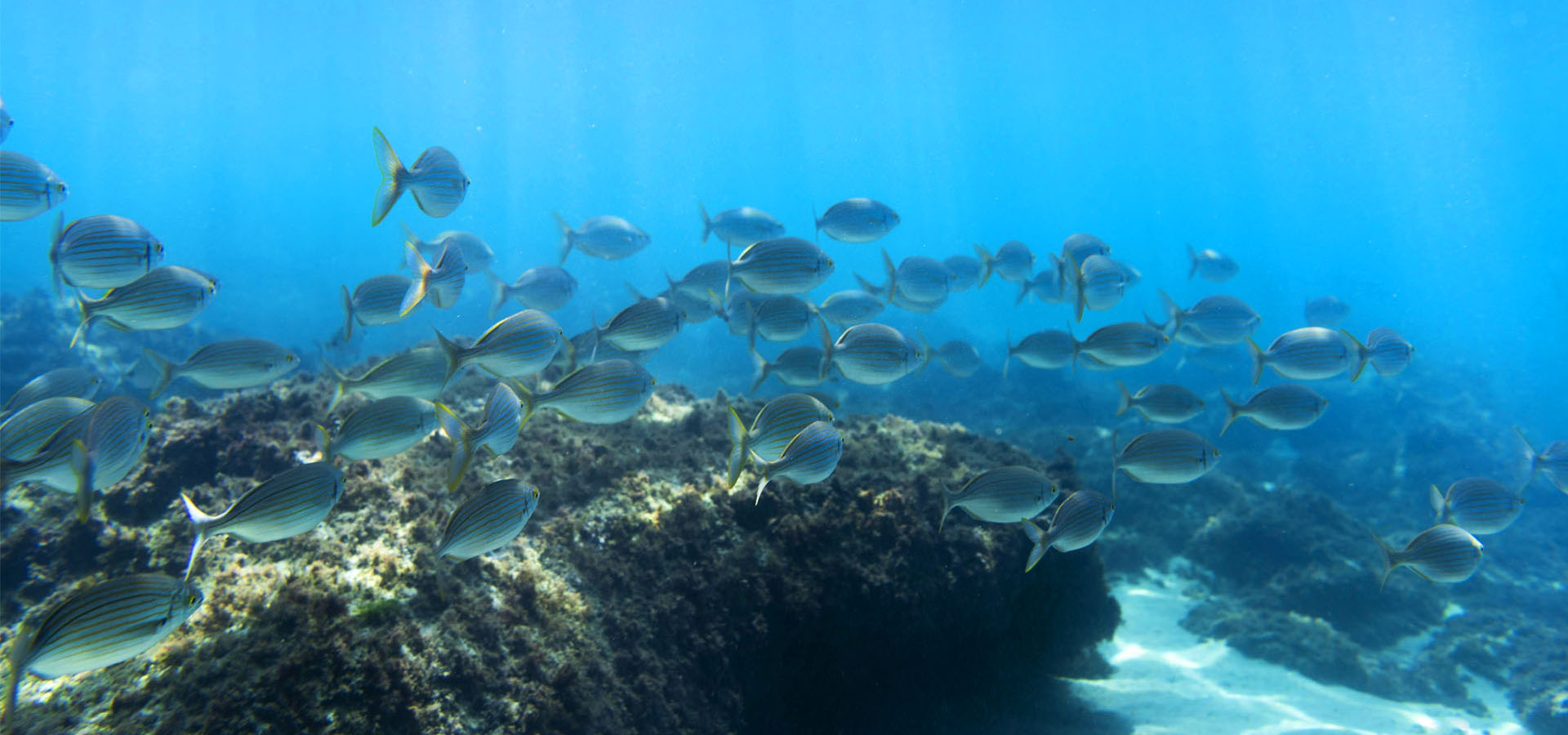
With easy dives or by snorkelling on the surface, it is possible to admire the granite rocks, pinnacles and clefts, often coloured by the yellow of sea daisies or the red of gorgonians, where quiet populations of groupers, dentexes and large giltheads and shoals of Mediterranean barracuda wander placidly in search of food. Among the marine mammals, in addition to the frequent presence of the coastal dolphin, the bottlenose dolphin, in recent years, specimens of the fin whale have been spotted sailing up the east coast of Sardinia towards the Ligurian Sea, as well as sperm whales, common dolphins and stenellas.